


A designer came to me last year—talented portfolio, gorgeous work, and absolutely exhausted.
When I asked about her workflow, she pulled out her phone and scrolled through 14 separate Gmail threads from one client.
“I keep it simple,” she said, showing me her colour-coded inbox system. “No fancy software. Just email, Google Drive, and these notebooks.”
She gestured to three overflowing journals, each stuffed with Post-its.
Not long into our session, the truth emerged: she was spending 70% of her week explaining her process, hunting for feedback buried in email threads, and recreating files she couldn’t find. By the time she opened Illustrator, her creative tank was running on fumes.
“But this is how I’ve always worked,” she shrugged. “I didn’t know there was another way.”
And that’s the thing—most designers don’t. They’ve either never heard of tools built specifically for creative workflows, or they’ve glimpsed them and immediately thought: “That looks complicated. I don’t have time to learn new systems. What I’m doing works…mostly.”
But here’s what I’ve learned after helping countless designers transform their processes: what feels like “keeping it simple” is costing you your most valuable resource—your creative energy. Learning how to protect your creative energy becomes essential when simple systems are secretly draining it.
The hidden trap of “simple” systems.
Even after designers discover tools like Dubsado or ClickUp exist, most still hesitate to make the switch. I’ve spent a lot of time unpacking why talented creatives resist the very systems that could free them, and it goes much deeper than just being “set in their ways.”
Here’s what’s really happening:
The fear of complexity
Most designers resist systems because they worry that complexity will overwhelm their already busy schedule. They’re not avoiding systems because they’re lazy—they simply don’t realise tools like Dubsado or ClickUp were designed specifically for creative professionals like them. They’ve never seen how these tools can reduce complexity, not add to it.
The “not big enough” myth
“I’m not busy enough to need systems yet.” I hear this constantly from designers who think proper workflows are only for when they’re (almost) fully booked or for agencies or studios with employees. This misconception keeps solopreneurs trapped in manual processes far longer than necessary, burning creative energy they can’t afford to waste.
The mental load factor
Each time you recreate an email, hunt for buried feedback, or explain your revision process for the tenth time, you’re spending cognitive resources that don’t easily regenerate. This invisible mental load follows you everywhere, even when you’re not working. It’s the reason you wake up thinking about client projects instead of fresh creative ideas.
The confusion between simple and sustainable
The most damaging misconception? That “simple” tools equal a sustainable business. Email seems simple until you’re managing 10 client threads. Google Drive feels straightforward until you can’t find that one crucial file during a client call. What looks minimal on the surface often creates maximum mental overhead behind the scenes.

The breaking point hardly anyone talks about.
The most dangerous part? This energy drain isn’t obvious until you hit a wall.
I’ve watched talented designers struggle through months of declining creative quality before recognising the problem. They blame it on overwhelm or difficult clients—everything except the invisible systems vacuum that’s been quietly siphoning their creative energy.
Your creative capacity isn’t infinite. And contrary to popular belief, it doesn’t just need rest to replenish—it needs protection.
👉 Systems aren’t just about productivity, efficiency, running your business on autopilot or scaling faster—they’re energy preservers.
Here’s where we need to fundamentally rethink what systems do for creative businesses
When done right, systems don’t exist to just handle “more” work or to make you more “professional.” They exist to create a protective boundary around your most valuable resource: your creative thinking capacity.
This isn’t about productivity. It’s about preservation. Not about doing more. About protecting the quality of what you do. Not about scaling your business. About sustaining your creative edge.
Now, I need to be honest with you about something. I didn’t burn out because I lacked systems. I burned out because I used them to force outcomes instead of honouring capacity. I was brilliant at execution. I could build a plan, hit the target, optimise the workflow—and override my energy the whole time.
So when I see designers afraid to add structure because they think it will kill their creativity—I get it. But what I’ve learned is: it’s not structure that kills creativity. It’s the wrong structure. Built at the wrong time. For the wrong reasons.
The designers who truly thrive aren’t just the ones who’ve found the “perfect tools” (spoiler alert: the perfect tool doesn’t exist. It’s the one you use), they’re the ones who’ve recognised that every minute spent on repetitive tasks is creative potential lost.
They’re the ones who’ve built intentional frameworks that capture project management details so their minds can remain free to create. They understand that systems aren’t about becoming more rigid—they’re about creating more freedom.
Freedom to focus deeply. Freedom to experiment boldly. Freedom to deliver exceptional work without the mental exhaustion of reinventing their process with each client.
👉 The question for this blog: What would change if you approached your business setup not as an organisational challenge, but as a creative preservation strategy?
Where your creative energy actually disappears.
Once I started paying attention to my own energy patterns, I noticed three places where creative capacity was quietly draining away. I bet you’ll recognise them too. These aren’t productivity issues—they’re creativity killers that compound throughout your day.
The energy vampire tasks
Four major culprits steal focus and mental bandwidth in creative businesses. Each task feels manageable on its own. But together they create something much more draining.
- Rewriting the same emails repeatedly means making countless micro-decisions about tone, timing, and information each time you start from scratch.
- Explaining your process over and over forces you to re-teach concepts you’ve already clarified. This creates mental fatigue from constant context-switching.
- Searching for information across platforms fragments your attention. Flow gets interrupted every time you hunt for that buried contract detail or misplaced mood board.
- Handling avoidable client questions requires constant reassurance management. This happens when clients don’t understand where they are in your process.
Here’s what I wish someone had told me earlier: You do have time to be creative. Mental exhaustion just hits you before you sit down to create.
The false economy of “simple”
Avoiding systems because they seem like “more work” creates the most work of all. Manual handling isn’t just about doing the task. It’s carrying the mental load of remembering to do it, deciding how to do it, and keeping track of whether it’s done.
Your brain becomes a filing cabinet for process details, client preferences, project timelines, and follow-up reminders. But filing cabinets don’t create—they just store. More storage space dedicated to logistics means less capacity for creative problem-solving.
The creative recovery gap
Mental exhaustion doesn’t recover like physical fatigue. After hours of scattered admin work, your brain stays in reactive mode. Cognitive switching between different task types creates a fog that doesn’t clear when you finally open Illustrator.
Without structure, I found myself starting from zero with every single project. It felt like I’d never done this work before. Momentum becomes impossible because you’re constantly problem-solving logistics instead of design challenges.
Your brain never settles into the deep focus that produces your best work. Clients end up receiving diluted creative thinking instead of your brilliant problem-solving abilities.

But the real cost runs deeper.
This energy drain costs you more than time. It costs you the thing clients hire you for: your creative vision. Mental exhaustion from managing confusion and logistics makes your design decisions more conservative. Safe choices replace bold ones. Problems get solved functionally instead of brilliantly.
When creative confidence starts to crack
For a long time, I struggled with this exact pattern. I’d block off time for design work, but when I sat down to create, nothing came. Something felt wrong with me as a designer—why couldn’t I access that creative flow when I needed it most?
My brain had already spent hours making micro-decisions about emails, hunting for files, and explaining process details. By the time I opened my design software, no creative energy remained.
The overcompensation trap
When you can’t access your creative thinking, doubt creeps in. Overcompensation follows: Hours are spent searching for the “perfect” font when any of the five good options would work beautifully. Seventeen logo variations are created when three would suffice.
This isn’t perfectionism. It’s creative insecurity born from exhaustion. Proving you’re a good designer through sheer effort happens because you can’t trust your instincts when they’re buried under mental fatigue.
The confidence erosion
I’ve watched talented designers gradually lose confidence in their creative instincts. Not because their skills diminished, but because they rarely had the mental space to access their best thinking. Decision-making that should feel obvious becomes paralysing. Choices that would have been slam-dunks with clear minds become sources of endless second-guessing.
Designers who create work that gets shared and builds reputations have learned something crucial. Creative capacity gets protected like the finite resource it is. Best work doesn’t come from working harder—it comes from working with a clear, focused mind.
Protection, not just productivity.
Here’s the perspective shift that transformed how I look at the systems I’m using. This insight has helped so many of my clients do the same:
👉 Your systems aren’t just organising your business—they’re protecting your creative capacity and preventing burnout. This isn’t about doing more; it’s about preserving what matters.
Efficiency for efficiency’s sake isn’t the goal. Creating protective boundaries around your most valuable resource is. That resource? Your ability to think creatively and solve problems in ways only you can.
Administrative tasks shouldn’t be treated like creative problems that need your full attention. Preserving that attention for work that requires your unique perspective makes all the difference.
The complete vs. endless mindset shift
One of my clients recently emailed me something that perfectly captures why this matters: “Since I started using ClickUp to plan my weeks based on my actual capacity, I feel complete at the end of each week. When the planned tasks are finished, I’m done—and I can rest.”
This captures why the ClickUp DWY program doesn’t just focus on integrating your client workflow. Task management alone isn’t enough. The psychological shift from endless mental carrying to clear boundaries changes everything. Systems that handle logistics give your brain permission to truly rest. Rested brains create better work.
Breaking the always-on cycle
Without structure, you’re never really off. Part of your mind constantly runs through the mental checklist of forgotten tasks, client follow-ups, and floating responsibilities. Systems that capture and organise these details build trust. Nothing important slips through the cracks. Your mind becomes available for the deep thinking that produces breakthrough creative solutions.
Protecting where your best work lives
The shift isn’t about becoming more productive. It’s about becoming more protective of the mental space where your best work lives. That space is where clients get their money’s worth. It’s where you feel confident in your abilities. It’s where the work you’re truly proud of gets created.

The three systems that protect your creative energy.
Here’s what I’ve discovered working with dozens of designers and through my own trial and error: successful creative businesses aren’t built on perfect systems. They’re built on the right systems, implemented thoughtfully.
Designers who’ve stopped feeling overwhelmed discovered where their energy leaks away. Then they built targeted protections around those specific pain points. While you can systematise most aspects of your business eventually, you don’t have to do it all at once. Fancy isn’t required for effectiveness.
This is about building foundational support that grows with you. Complexity that overwhelms you isn’t the goal. Let’s look at the three core systems that make the biggest difference for designers:
The client communication shield
Creative momentum dies fastest when you’re crafting the same explanations repeatedly while projects wait.
“Here’s how feedback works” written from scratch means making dozens of micro-decisions every time. How formal should this sound? Did I explain revisions clearly enough? Should I mention the timeline again? That nagging feeling about forgetting something important? That’s your creative brain being hijacked by logistics.
Creative decisions they’re not—they’re energy drains disguised as client care.
Building your shield
The communication shield protects you from this mental load while improving your client experience. Consistent and thorough communication makes clients feel more secure, not less personal.
Here’s what this looks like in practice:
- Your onboarding sequence: New client orientation happens through a series of emails instead of scrambling to remember what they need to know. These emails set expectations and answer common questions before they’re asked.
- The feedback framework: The revision process explanation happens upfront through your welcome guide rather than mid-project when tensions are high. Clients learn exactly how to give useful feedback. Vague “Can you make it pop more?” responses that force guessing games get eliminated.
- Phase transition communications: Email templates smoothly guide clients from strategy to concepts to revisions to final files. Clients stop wondering “What happens next?” after each milestone. Each email creates closure for the completed phase while building anticipation for what’s coming.
The result? Clients feel guided and informed. You preserve mental energy for design decisions instead of communication logistics.
The project protection system
For designers, project protection isn’t about staying organised. It’s about maintaining the creative integrity of your work. Projects without a clear structure lead to design decisions based on client anxiety rather than creative strategy. (I’ve been there—changing fonts because clients kept sending new ideas, not because it served the design.)
How strategic workflows protect your creative process
- Checkpoint clarity: Built-in milestones automatically orient both you and your client instead of wondering “Are we on track?” throughout the project. These checkpoints prevent panic-driven “Can we add just one more thing?” requests that derail timelines.
- Revision boundaries: Clear revision limits get established upfront through your workflow rather than having awkward scope conversations mid-project. Clients get guided through each round systematically. Creative vision stays protected from endless tweaks that dilute the work.
- Decision documentation: Key choices get captured and confirmed as they’re made instead of rehashing decisions weeks later (“I thought we agreed on the blue version?”). Creative backtracking that wastes time and momentum gets prevented.
Project protection systems that work mean energy goes to creative problem-solving instead of project firefighting. Clients feel confident because they understand the process. You feel confident because the structure supports your best work.
The mental load reduction framework
Most designers don’t realise they need this system until they build it. Then they wonder how they ever worked without it.
Your brain shouldn’t be your filing cabinet. Project details, client preferences, and follow-up tasks that you’re mentally tracking represent cognitive space. That space could be used for creative thinking instead.
Systematic detail capture for creative focus
The mental load reduction framework captures these details systematically. Your mind gets freed to focus on what only you can do:
- Internal checklists: Repeatable checklists in ClickUp ensure nothing falls through the cracks instead of wondering “What did I forget to do?” Mental scanning which happens when processes live only in your head gets eliminated.
- Automated reminders: Dubsado handles touchpoints like following up on that unfilled onboarding form automatically. Your brain gets freed from constant task monitoring instead of carrying the weight of remembering when to follow up.
- Decision trees: Clear protocols for common situations (“client went quiet,” “feedback is confusing,” “timeline needs adjustment”) remove decision fatigue from recurring challenges. Responses to familiar situations don’t need reinventing.
Reduced mental load means showing up to creative work with a clear head instead of a cluttered one. The difference in creative output is dramatic.
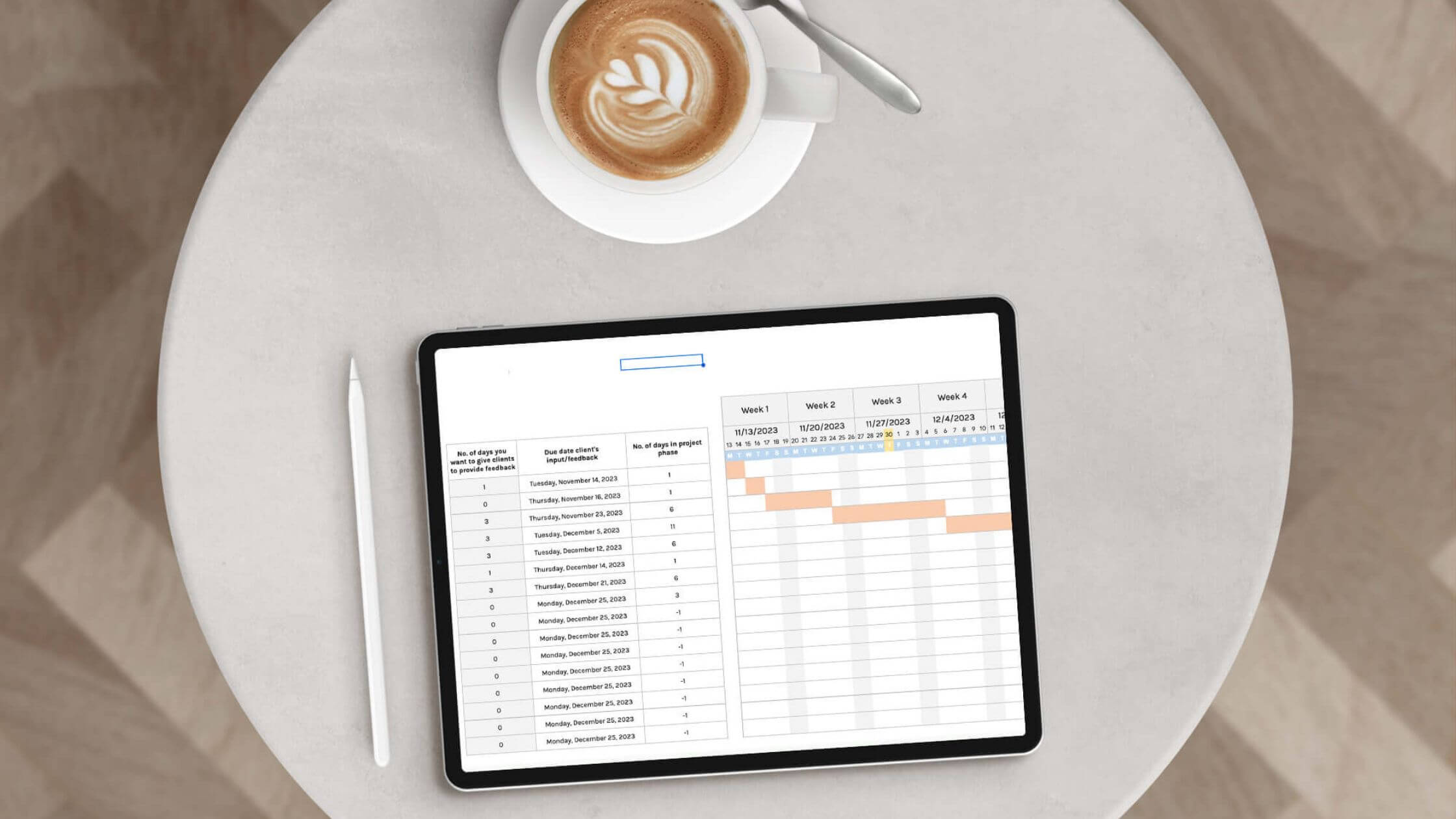
Build systems that protect your creative energy.
The approach that works isn’t “systematise nothing” or “systematise everything at once”—it’s about building the right foundation first, then expanding strategically as your business grows. Whether you end up using tools like Dubsado for client management or ClickUp for project workflows, the key is starting with systems that address your most pressing energy drains.
You can absolutely systematise most aspects of your creative business over time—client communication, project management, file organisation, invoicing and scheduling. But trying to build it all simultaneously without clearly mapped out processes is what overwhelms designers and makes them abandon systems altogether.
Start with the one area where you feel most drained or frustrated right now. Build that foundation solidly. Get comfortable with how it supports your work. Then expand to the next system when you’re ready. The goal isn’t to become a systems expert overnight—it’s to become a designer who’s supported enough to do their best creative work consistently. Your systems should feel like scaffolding that grows with your business, not a cage that restricts it.
This intentional approach is exactly why my Done With You programs focus on mapping your specific workflow needs before jumping into tool implementation. When you understand what specifically works for you, you can build systems that protect what matters rather than adding complexity for complexity’s sake.
Building systems that actually stick.
I know you’re tired of starting over. I know you’re worried about investing time in another system that might not work or hesitant to even start with one because it all feels overwhelming.
The tools that stick are the ones that you use and can grow with your business without forcing you to start over every time your needs evolve.
The system simplicity principle
The systems that stick aren’t the most comprehensive or pretty—they’re the most aligned with how you think and work. They feel invisible because they anticipate what you need without requiring you to remember what you need.
I used to build systems that required me to be perfect. Now I build systems that work when I’m human.
- Client communication systems should know that new clients always ask about timelines, so it includes that information upfront.
- Project workflow should catch the revision requests that typically derail timelines before they become problems.
- File organisation should put the assets you always need in the places you always look.
When systems truly work, they fade into the background. You’re not thinking “I need to update my project tracker” or “I should send the next client email.” The system either reminds you of that or handles the logistics while you focus on the creative work.
The goal isn’t to impress yourself with sophisticated automation. It’s to reduce the mental load of constantly anticipating what comes next. When your systems think one step ahead—not ten steps, just one—they create ease instead of complexity.
That invisibility comes from building systems that match your natural workflow patterns instead of forcing you to adapt to rigid structures. Smart system building means creating space for growth without overcomplicating the present. I’m currently working with a client who knows she wants to hire support eventually, so we’re building custom fields in ClickUp that identify task ownership from the start. She’s not managing a team yet, but when she is, the infrastructure will already be there. No rebuilding required.
The tools that matter
Some designers think in linear steps and need workflows that move sequentially. Others think in visual maps and need tools that let them see everything at once. Some need detailed checklists, others prefer flexible frameworks that can adapt project by project.
This is exactly why I recommend tools like ClickUp and Dubsado. Not because they’re perfect, but because they’re forgiving. They let you start simple and add complexity only when you need it. They don’t punish you for changing your mind or growing your business.
When I work with designers in my DWY ClickUp or Dubsado program, we always start by mapping their complete client journey before touching any tools. Because here’s what I’ve learned: the tool doesn’t matter if you don’t understand your own process first.
ClickUp’s lists and visual project boards can start as basic internal project tracking and evolve into sophisticated business management. Dubsado can manage your complete external client experience from first contact through project completion. The key is implementing these tools to support your complete client process from the start, rather than piecemealing 4 different platforms that don’t talk to each other.
The implementation approach that works
Your first client workflow doesn’t need to handle every possible scenario—it needs to handle the most common steps and have flexibility (email templates as backup) for the unexpected ones.
Systems that evolve with your experience are systems that last because they’re built on reality, not theory.

The creative energy transformation you’re really after.
Remember that question we started with? What if systems weren’t about productivity but about the preservation of your most valuable asset—your creative capacity?
Here’s what changes when you make this shift. Instead of:
- Building systems to handle more work → You build systems to protect the quality of work you already do
- Optimising for efficiency → You optimise for creative clarity and mental space
- Measuring success by how much you accomplish → You measure success by how creatively energised you feel at the end of each project
- Fighting against your creative nature → You build a structure that supports and amplifies it.
I know how exhausting it feels to keep starting over with systems. I know the guilt of seeing those abandoned setups and thinking you’re just “not a systems person.” But here’s what I’ve learned from walking this path myself and with dozens of designers:
Systems aren’t just organisational tools
They’re protective boundaries that preserve your ability to do meaningful creative work. When you identify your energy drains, implement targeted protections, and take a sustainable approach to building those protections, you create space for your best work to happen.
The transformation isn’t just about becoming more organised or more efficient. It’s about becoming more protected from:
- The mental load that fragments your attention.
- Repetitive tasks that exhaust you before you create.
- The constant context-switching that prevents deep creative thinking.
When you stop thinking about systems as productivity hacks and start thinking about them as creative preservation tools, you build differently. You focus on protection over perfection. You choose sustainability over sophistication or pretty. You create support that grows with you instead of overwhelming you.
The designers who thrive aren’t the ones with the most complex systems—they’re the ones whose systems truly serve their creative work. Every system they build passes a simple test: Does this give me more creative energy than it takes? When the answer is yes, you know you’re building something that will last.
Your practical starting point.
Ready to build systems that actually serve you? Here’s your practical starting point:
This Week:
Identify your top 3 energy drains using the framework above—where are you losing creative capacity to repetitive tasks? Choose one comprehensive process to implement—either client experience management or project workflow management. Map your complete process in that area before building anything. Test it on your next project.
This Month:
If you want to tackle client experience management, my Client Experience Mapping service walks you through mapping your complete client journey—from first contact to project completion. Because the magic happens when you understand your process first, and then build systems to support it.
For hands-on implementation with ClickUp or Dubsado, my Done With You programs help you with mapping the process and building these workflows into your systems with ongoing support.
Remember: Done is better than perfect. Your first system just needs to work, not win awards.


