Most designers skip market research entirely. And honestly? I get it. When you’re building a design business, it feels easier to rely on your assumptions about who needs your services and what they’re looking for.
But here’s what happens when you skip this step:
→ You attract clients who can’t afford your pricing.
→ You spend time creating services no one’s asking for.
→ You write website copy that sounds good to you, but doesn’t resonate with the people you want to work with.
And you wonder why inquiries aren’t converting.
Or maybe you do market research, but you’re only scratching the surface. You ask about pain points and goals, which is useful. But you’re missing a critical piece: understanding what kind of experience your ideal clients expect when they hire a designer.
Knowing someone struggles with “not attracting the right clients” doesn’t tell you whether they want a hands-off process or deep collaboration. Knowing their budget doesn’t tell you whether they expect same-day responses or are fine with 48-hour turnarounds. Knowing they want a strategic brand identity doesn’t tell you what they think that actually includes.
Market research should tell you who your ideal clients are AND what they expect working with you to feel like. When you know both, you can build services, pricing, positioning, and client experience that actually match what they’re looking for.
You’ll learn:
- Why market research matters more than you think
- What you should be asking to understand your ideal clients
- What you’re missing about client experience expectations
- How to turn this research into better positioning, proposals, and processes
Why market research matters for designers
I often talk to designers who don’t fully recognise the value of market research. They assume they already understand their clients, or they underestimate how much this research should influence their services, pricing, messaging, and how they structure their entire client experience.
Let me show you what happens when you skip this step.
Meet Emily (and her preventable problem)
Emily is a talented brand designer who left agency life to start her own studio. She’s passionate about strategic branding and confident in her abilities. But in her eagerness to launch, she skipped market research entirely.
Emily envisioned working with clients who valued strategic branding and were willing to invest in premium services. She believed her passion and expertise would attract the right people. She built packages, set pricing, launched her website, and waited for ideal clients to find her.
Instead, she got:
→ The wrong clients: Without understanding who her ideal clients actually were, Emily’s marketing cast a wide net. She attracted people seeking quick logo designs at minimal cost, not strategic brand identities. They saw her services as commodities, not expertise.
→ Pricing shock: Emily didn’t show pricing on her website, assuming clients would understand the value of strategic branding. Instead, prospects booked consultation calls and were shocked when she mentioned her prices. Countless inquiries and calls didn’t result in signed contracts.
→ Unrealistic expectations: The clients who did hire her expected complex branding projects to be completed in days. Emily hadn’t outlined her process on her website or explained timelines, assuming clients would understand the scope. They didn’t.
→ Preparation issues: Clients showed up unprepared. They lacked branding materials, content, or clarity on their business goals. This caused delays and frustration on both sides.
The lessons Emily learned
Over time, Emily realised market research wasn’t a nice-to-have. It was essential. Understanding her ideal clients would have helped her tailor her services, pricing, messaging, and client experience to attract people who actually valued what she offered.
Emily’s journey taught her that market research isn’t just about discovering what clients want to achieve with a new brand or website. It’s about:
→ Understanding the deeper needs and expectations of your target audience
→ Identifying what they’re willing to invest and what they expect for that investment
→ Learning what “organised” or “collaborative” means to them
→ Discovering what past experiences shape their expectations
→ Finding gaps in the market that you can fill
Importantly, this doesn’t mean lowering your prices if your current audience insists they can only afford $500 for branding.
What to consider before you start doing market research.
Before I walk you through how to actually do market research, I need to share my own cautionary tale because I made mistakes that nearly derailed my business.
My own market research failure
As a brand and website designer, I saw clients struggling with fundamental business challenges. While a new brand or website could help, it couldn’t solve their lack of effective processes, financial clarity, or strategy to attract ideal clients. With my corporate background, I believed I could help them build sustainable, profitable businesses. So I transitioned from offering design deliverables to focusing on brand strategy and business coaching. I invested in courses, took on the title of brand strategist, and even conducted market research to validate my approach.
The research looked promising. But when I launched my new brand, website, and services, I was met with silence.
Here’s what went wrong:
→ I didn’t bring my existing audience along on the journey. I assumed they’d understand my shift from design to brand strategy. They didn’t. The transition felt abrupt and confusing.
→ I didn’t listen to what potential clients were actually searching for. I learned about their problems, but I wasn’t paying attention to the language they used to describe those problems or what solutions they expected.
When someone struggles with attracting ideal clients, they might search for a marketing expert or a coach. They’re not necessarily searching for a “brand strategist,” even if that’s exactly what they need.
The lessons that saved my business
I had to do more research. This time, I focused on two things:
→ Lesson 1: Stay open-minded when listening to potential clients. Don’t just look for validation of what you already believe. Look for what they actually need and how they describe it.
→ Lesson 2: Learn your target audience’s language. What terms do they use? What solutions are they searching for? Your messaging needs to align with their language, not just your professional terminology.
After adjusting my positioning and messaging to match what designers were actually looking for, I got an inquiry that included this: “When your website said ‘You don’t need another workshop, you need a second set of eyes on your business’ I felt that. Like really felt that.”
That’s when I knew I’d finally gotten it right.
How to do market research for your design studio
Now let’s get into the practical steps. Market research doesn’t have to be complicated, but it does need to be intentional.
1. Set clear objectives
Before you jump into research, set clear objectives. You can’t ask about everything at once—you’ll overwhelm people and end up with superficial answers. Market research is designed to gather specific information, not as much information as possible. When you set objectives, you give yourself focus and direction, which helps you determine what questions to ask.
For instance, an objective could be: “Understand what factors influence my ideal clients when choosing a designer” or “Identify my audience’s main pain points and what solutions they’ve already tried.”
Here’s an example from my own experience:
When I was transitioning my business, I realised I needed clarity on which designers I could actually help best. I conducted two rounds of market research:
→ 1st round – Niche clarification: I talked to as many designers as possible. From agency owners to freelancers to solo business owners. I asked about their main struggles, what type of support they’d be interested in, and their budgets. This helped me narrow down which type of designers I felt I could support best based on my experience and what I enjoy teaching.
→ 2nd round – Understanding my target audience: I focused on designers who identified as business owners (not just freelancers taking whatever projects came their way). I asked why they felt confident as designers but not as business owners. This led me to terms like “sustainable,” “aligned,” and “profitable.” I learned what they’d already tried—generalised business programs that didn’t understand design studios, or piecing together advice from free templates that didn’t quite fit.
Both rounds had different objectives, which let me get the specific information I needed to adjust my positioning, messaging, and services.
2. Decide your market research approach
Selecting the right participants and method for your research is crucial.
Where will you find the right people?
If you ask your Instagram audience and they generally don’t engage with you, you probably won’t get responses. If you go to a Facebook group for people just starting businesses, but you want to work with established designers who value expertise and can afford premium pricing, those aren’t your people. Spend time brainstorming where you can find your best audience. Consider their demographics, online behaviours, and preferred communication channels.
How will you conduct the research?
→ Online surveys (SurveyMonkey, Google Forms): Quick and easy to distribute, but often give surface-level responses. People write the first thing that comes to mind.
→ Face-to-face interviews (Zoom): More time-consuming but provide deeper, more detailed information. You can ask follow-up questions and clarify vague answers.
→ Social media: Can provide insights, but only if you have the right audience who actually engages with you.
While surveys seem convenient, interviews give you richer information. You’ll hear the exact language people use, you can dig deeper into their answers, and you can ask clarifying questions that reveal what they really mean.
3. Determine the right questions
Based on your objectives, you need to determine your questions. Here’s where most designers stop too soon. They ask about pain points and goals, which is important. But they don’t ask about experience expectations, which is just as critical.
Questions about their challenges and goals
These are the foundational questions that help you understand who your ideal clients are:
- What’s your biggest challenge with [your design niche – branding, web design, etc.]?
- Why do you think this is a struggle for you?
- Is solving this a priority right now?
- If yes: Why is this important? What’s your main motivation for finding a solution?
- If not: What’s more important right now? What’s your biggest priority? What’s stopped you from taking action on this?
- What would happen if you didn’t solve this problem? What would your business look like?
- What have you already tried to solve this? What worked well? What didn’t work? Why?
- If you’re looking for help with this, what would the perfect solution look like?
- How much would you feel comfortable investing in this solution?
These questions give you insight into their pain points, priorities, budget, and what solutions they’re actually looking for.
Questions about experience expectations
But here’s what most designers don’t ask—and what you should add to your research:
About past experiences:
- Have you worked with a designer before? What was that experience like?
- What worked well about that process? What didn’t?
- If you haven’t worked with a designer, what have you heard from others about the experience?
- What concerns do you have about hiring a designer?
About process expectations:
- When you think about working with a designer, what does that process look like in your mind?
- How involved do you expect to be in the project?
- How often would you expect to hear from your designer during the project?
- What would “organised” or “professional” look like to you from a designer?
- What would make you feel confident you’re working with the right person?
About communication:
- How do you prefer to communicate? (Email, Slack, Zoom, something else?)
- When you ask a question, how quickly do you expect a response?
- Do you prefer detailed explanations or concise updates?
- How do you like to give feedback?
About deliverables:
- When you think about [your service], what do you think is included?
- What deliverables do you expect to receive?
- How long do you think this type of project should take?
These questions reveal what clients expect the experience to feel like, which is just as important as knowing what they expect you to deliver.
4. Determine how to conduct interviews
If you’re doing interviews (which I recommend), don’t send questions in advance. You want natural conversation, not rehearsed answers. Schedule 30-45 minute Zoom calls. Record them with permission and use a tool like Otter or Descript to transcribe them.
Start with easier questions about their business and current challenges. Then move into the experience questions. Follow up on interesting answers. If someone says, “I just want someone who’s organised,” ask what organised means to them specifically. The best insights come from these follow-up questions.
5. Analyse the data
Don’t stop after you’ve had the conversations. This is where the real value comes from. Record your interviews and get them transcribed. Then organise your findings in spreadsheets or tools like Miro to identify patterns, recurring words, or insights aligned with your objectives.
Look for:
→ What pain points keep coming up?
→ What language do they use to describe their problems?
→ What past experiences have shaped their expectations?
→ What do most people expect from the process?
→ Where are their expectations different from what you currently offer?
→ What concerns or fears do they mention repeatedly?
These patterns tell you what matters most to your ideal clients—both in terms of what they want you to deliver and how they want you to deliver it.
Understanding what clients expect from their experience is one side of this. Understanding why your client projects feel harder than they should for you as the designer is the other, and it’s worth reading alongside this blog.
What to do with your research insights
After you’ve done your research and identified patterns, here’s how to actually use what you learned.
Refine your positioning and messaging
Your research should directly influence how you talk about your services.
→ If clients consistently mention worrying about designers who disappear, address that in your positioning. Not by saying “I won’t disappear” (that plants the worry), but by talking about how you keep clients informed throughout the process.
→ If they mention frustration with unclear pricing, make your pricing transparent. If they’re comparing you to cheaper options, your messaging needs to explain what’s different about your approach and why it matters.
Use the language they used in your interviews. If they said they felt “overwhelmed” or “in the dark” or “unsure what to expect,” those are the phrases that will resonate in your marketing.
Adjust your services and pricing
Your research might reveal that what you’re offering doesn’t match what your ideal clients actually need. Or that your pricing doesn’t align with what they’re willing to invest. This doesn’t mean you have to lower your prices. It might mean you need to adjust your positioning to attract clients who can afford you. Or it might mean creating different service tiers—maybe a streamlined package for clients who have smaller budgets but still value quality.
If you learned that clients expect certain deliverables you’re not currently including, you can either add them or clarify in your positioning why you don’t include them.
Build a client experience that matches expectations (and how you work best)
This is where your research about experience expectations becomes invaluable. But here’s the critical distinction: you’re not trying to accommodate every expectation you discover. You’re looking for the intersection between what your ideal clients expect and how you actually work best.
Your research will reveal patterns in what clients expect. The question isn’t “how do I deliver all of this?” The question is “Does this match how I want to work, or do I need to find different clients?”
→ If you learned that clients expect weekly updates: Do you want to provide that level of communication? If yes, build those touchpoints into your process. If not, you need to either adjust your positioning to attract clients who are comfortable with less frequent check-ins or acknowledge that these aren’t your ideal clients.
→ If they want clarity about what happens next: This is usually non-negotiable for good client experience. Make your process visible on your website and in your proposals. This works for most designers because it reduces questions and manages expectations
→ If they mentioned feeling unprepared in past experiences: You can create better onboarding materials that help them show up ready. But if you discover they expect you to hold their hand through every decision and you prefer more independent clients, that’s a signal about fit.
→ If they prefer email over Slack or vice versa: Consider whether you’re willing to adapt your communication method. Some designers are flexible here. Others have strong preferences about how they communicate and should find clients who match those preferences.
→ If they want to be hands-off versus deeply collaborative: This is a big one. If your process is built around collaboration and your ideal clients want to hand it off, something needs to change. Either adjust your process to require less involvement, or target clients who want that collaborative approach.
The goal isn’t to twist yourself into whatever shape clients expect. It’s to understand what they expect, decide what you’re willing to deliver, and then either build systems that deliver that experience or adjust your positioning to attract clients whose expectations already match how you work.
This is where tools like Dubsado and ClickUp become essential.
Once you know what experience matches both your ideal clients’ expectations and how you work best, you can systematise it.
→ Dubsado handles your client-facing processes: contracts, invoices, questionnaires, and automated email templates that keep clients informed at the cadence you’ve decided works
→ ClickUp handles your internal project management: tracking what needs to happen, managing deadlines, and keeping everything organised in a way that matches your workflow
When you set these up based on what your research told you AND what works for how you operate, you’re building systems that deliver a consistent experience without burning yourself out trying to be everything to everyone.
That’s exactly what I help designers do in my Dubsado and ClickUp Done With You programs and Client Projects by Design program. We look at what you’re currently doing, identify what’s not working and what’s draining you, then map a new client experience that actually works for how you want to operate. Then we build the systems that deliver it consistently.
Improve your proposals (and consultation calls)
Your research should directly influence how you write proposals, but also how you approach the consultation calls that come before them. These two pieces work together—what you discuss on the call should set up what appears in the proposal. Nothing in your proposal should surprise a potential client.
During consultation calls, use what you learned from research to:
→ Address the concerns that came up repeatedly in your interviews. If clients mentioned worrying about communication, bring up how you keep clients informed before they have to ask.
→ Ask questions that reveal whether this client’s expectations match what you discovered in your research. How involved do they want to be? What’s their timeline expectation? What does their budget look like?
→ Explain your process in a way that manages expectations. Don’t save this for the proposal—walk them through what working together actually looks like.
→ Clarify what’s included and what’s not, especially if your research revealed common misconceptions about your services.
The consultation call is where you determine fit and set the foundation for the proposal. When you send the proposal, it should feel like a natural continuation of that conversation, not new information.
In your proposals, address what you learned:
→ If clients mentioned being confused by other designers’ vague processes, make your timeline crystal clear. Break down each phase and what happens when.
→ If they’re worried about communication, outline exactly how and when you’ll keep them informed. Don’t just say “regular updates”—specify what that means.
→ If they’re comparing you to cheaper options, show what’s different about your approach and why it matters. Connect back to what you discussed on the call about their specific needs.
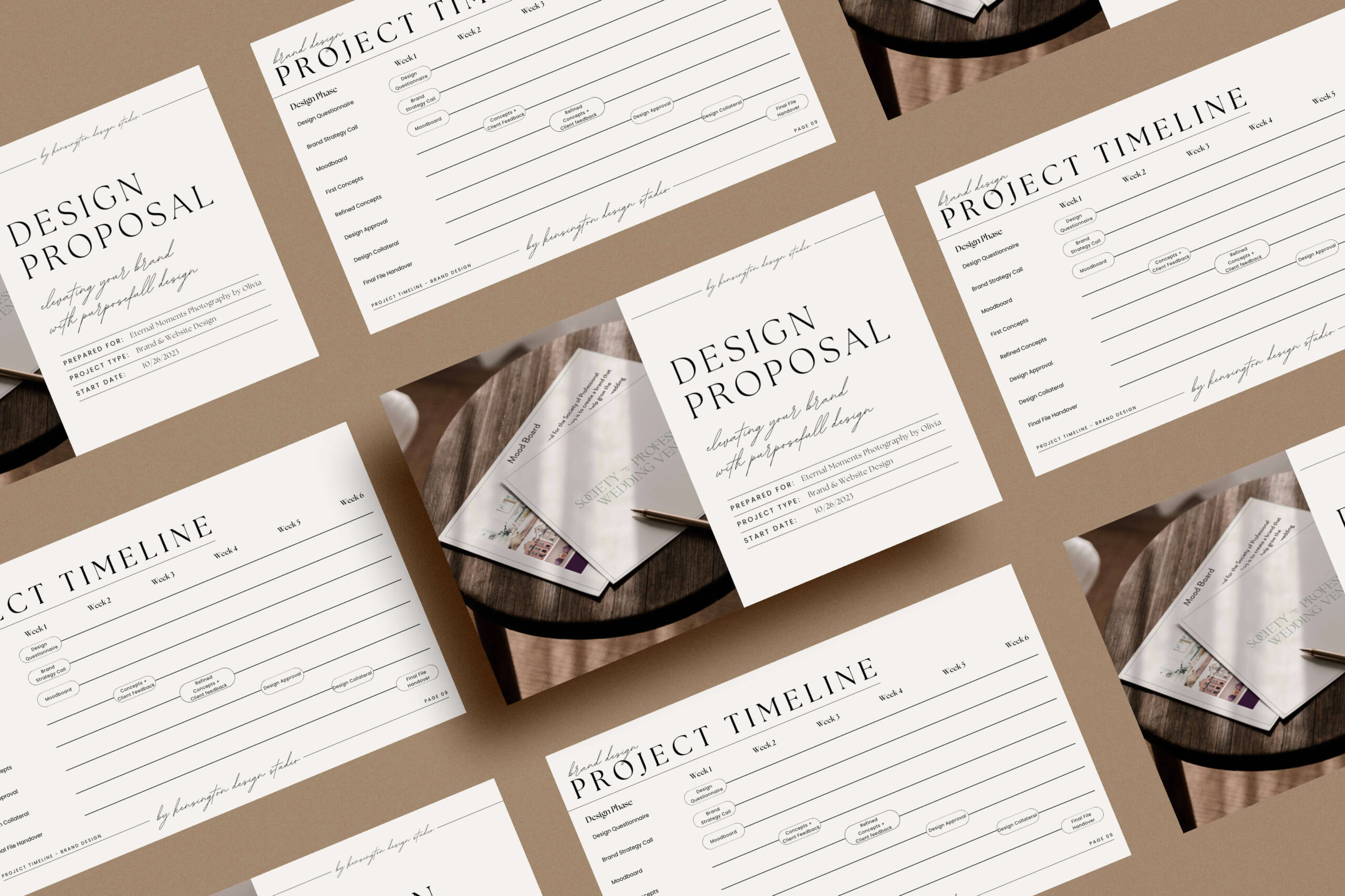
If your research revealed they need help preparing for the project, include a “What I’ll need from you” section that sets them up for success.
I cover this in depth in my Proposal Guide, but the key is: your proposal should reinforce what you discussed on the call and make it obvious what working with you will feel like, not just what you’ll deliver.
A final word about staying open-minded
The biggest mistake you can make with market research is only listening for things that confirm what you already believe.
If you go into interviews hoping to validate that clients want exactly what you’re offering, you’ll miss important insights. Stay open to being wrong. Stay curious about answers that surprise you. Pay attention to the gap between what you assumed and what you’re actually hearing.
And remember: market research isn’t about bending your entire business to fit everyone’s expectations. Sometimes the research tells you “these aren’t my people” as much as it tells you “this is exactly who I should serve.”
The goal is clarity. Clarity about who your ideal clients are, what they need, what they expect, and how you can position yourself to attract them while delivering an experience that turns them into raving fans.
→ Related: why your client projects feel harder than they should, on why projects keep feeling exhausted even after finding the right people.
Wrapping it up
Market research matters more than most designers realise. It’s not just about validating your business idea or understanding surface-level pain points. It’s about deeply understanding who your ideal clients are, what they’re struggling with, what solutions they’re looking for, and what kind of experience they expect when they hire a designer.
When you have this clarity, everything else falls into place. Your positioning speaks directly to what they need. Your services match what they’re looking for. Your pricing aligns with what they’re willing to invest. And your client experience delivers what they actually expect, not what you assume they want.
The designers who consistently attract ideal clients and get referrals aren’t just talented. They’ve done the work to understand their audience and built their entire business around serving those specific people well.
So here’s my question for you: How well do you actually know your ideal clients? Are you making assumptions, or have you had real conversations that gave you clarity?
If you’re not sure, it might be time to start asking.