


Over the past few months, I’ve received several emails from designers in my programs asking for help with client responses. Here are three that perfectly capture what I see happening:
→ Email 1: “A lead is questioning my pricing and suggesting I lower my price because there will be more work in the future. How do I respond without sounding ungrateful for the project?”
→ Email 2: “My client just asked for ‘one more font option’ while I was ready to export final files. I don’t want to be difficult, but this feels like scope creep.”
→ Email 3: “My client keeps saying the concepts are ‘close but not quite right’ without giving me specific feedback. I’m not sure how to move forward.”
Every designer faces pricing pushback, scope boundary tests, and unclear feedback. But here’s what struck me: each designer was treating their situation like a unique crisis, instead of a predictable scenario that could be handled systematically.
They weren’t lacking design skills or business knowledge. They were lacking prepared frameworks for situations that happen in nearly every client relationship.
One designer told me months after we worked together: “I realised I was turning down projects because I thought they could be a difficult client. In reality, I was avoiding situations because I didn’t trust myself to handle them without spiralling. Once I had templates and processes for these conversations, the same ‘difficult’ situations became routine client guidance.”
The situations hadn’t changed. Her preparation had.
This got me thinking: What if confidence in client relationships isn’t about controlling clients, but about trusting your own ability to handle whatever comes up?
Most designers spend energy trying to find “easy” clients or perfect project briefs. But what if the real solution is building enough internal confidence that you can handle any client situation professionally, regardless of who walks through your door?

What’s really behind client relationship anxiety.
You might assume client confidence comes from experience; the more projects you complete, the more assured you should feel. But I’ve worked with designers who’ve delivered dozens of successful projects and still get nervous with every new client.
Here’s what’s really happening:
The confidence gap.
You know you can create beautiful work. You have the portfolio to prove it. But when a client goes quiet mid-project or gives confusing feedback, you freeze. Not because you lack design skills, but because you haven’t mapped your process for handling these situations.
That moment of panic when a client says, “I’m not sure this is working”, isn’t about your creative abilities. It’s about not having a reliable framework for navigating the conversation that follows.
You probably recognise this pattern: you handle a tricky client situation successfully, feel relieved it worked out, but don’t feel any more prepared for the next curveball. Because you improvised your way through instead of following a systematic approach you could repeat.
Why client qualification alone isn’t enough.
Yes, strategic client qualification matters enormously. Having clear positioning, messaging that attracts the right budget clients, and a solid consultation call will absolutely improve the type of clients you attract.
But finding the “right” clients won’t eliminate the need to handle difficult conversations or unexpected situations. The reality? Even your dream clients, the ones with healthy budgets, clear vision, and respect for your expertise, will occasionally:
- Go quiet during feedback rounds.
- Ask questions that suggest they don’t understand your process.
- Request changes that feel like scope creep.
- Need more explanation than your welcome guide provides.
The control illusion keeps you believing that client confidence comes from external factors (better clients, bigger budgets, clearer briefs) rather than internal preparation (systematic frameworks for handling whatever emerges).
The preparation paradox.
Here’s the thing that used to puzzle me: I’d watch designers successfully navigate complex client situations (scope changes, timeline adjustments, unclear feedback) and then approach the next similar situation like they’d never encountered it before. They’d proven they could handle these challenges, but each new occurrence felt equally stressful. Why?
Because winging successful solutions doesn’t build confidence. It proves you can improvise under pressure.
When you don’t have systematic approaches for common client scenarios, every project feels like a creative experiment in relationship management. Sometimes you nail it. Sometimes you struggle. But you never build transferable confidence because you’re not sure which elements made the difference.
Understanding why that improvisation keeps happening (project after project) is what why your client projects feel harder than they should addresses.

The success paradox that keeps you anxious.
Sarah just finished wrapping up a brand identity project. Everything had gone smoothly, the client loved the final logo, paid the invoice without delay, and even left a glowing testimonial. But when a new inquiry landed in her inbox the next week for a similar project, that familiar knot formed in her stomach. “What if this one doesn’t go as well? Will this client be more demanding? Can I deliver the same quality under pressure?”
Despite having just proven her abilities with a successful outcome, she felt no more confident about the next client conversation than she had three projects ago.
“I don’t understand why I still feel this way,” she told me during our call. “The work itself isn’t the problem, I know I can do it. My portfolio proves that. So why do I still get anxious every time a new client reaches out?”
Here’s what’s happening:
The success without systems problem.
Every time you successfully handle a challenging client situation, your brain files it away as “that worked out.” But here’s the issue: positive outcomes don’t automatically create transferable knowledge.
Think about the last time you navigated a tricky scope conversation or managed a confused client. You probably felt relieved when it worked out, but did you feel more prepared for the next similar situation? Most likely not.
That’s because improvised solutions work in the moment but don’t build systematic understanding. You survived the situation, but you’re not entirely sure which elements made the difference or how to replicate the approach intentionally.
The expertise assumption.
Here’s what makes client relationship anxiety worse: your clients hire you as the expert, which means they expect you to have confident answers for situations you might be encountering for the first time.
When a client says, “What should we do about this timeline issue?” or “How do you usually handle situations like this?” they’re looking to you for decisive guidance. But if you’re improvising your response, that pressure to appear authoritative can be overwhelming.
You end up performing confidence you don’t feel, which creates an exhausting disconnect between your internal uncertainty and your external professional persona.
The confidence mirage.
External validation (client satisfaction, referrals, glowing testimonials) can mask internal uncertainty. Your portfolio shows successful outcomes, but that doesn’t necessarily translate to feeling secure about your process.
This creates a strange disconnect: you know objectively that you’re capable (the evidence is right there in your work), but you still feel subjectively anxious about client relationships.
The confidence mirage happens when you mistake successful outcomes for systematic competence. Clients are happy, projects get completed, referrals keep coming, but you still feel like you’re holding your breath through every challenging conversation.
Why doesn’t positive feedback create lasting confidence? Because it validates your results, not your process. A client saying “I love the final design” tells you the outcome was successful, but it doesn’t teach you which parts of your approach were most effective or how to replicate them consistently.
You end up with proof that you can deliver good work, but no systematic understanding of how you navigate the relationship challenges that emerge along the way.
But the real cost goes deeper than anxiety.
This isn’t about stress management or imposter syndrome. When you don’t have systematic confidence in your client relationship approach, you spend mental energy on relationship anxiety that could be directed toward creative problem-solving and business growth.
Every new client inquiry comes with a mental load of uncertainty: “What if they’re difficult to work with? What if they don’t respect my process? What if I can’t handle their specific challenges?”
That background anxiety affects how you show up to client interactions. You might find yourself being overly accommodating to avoid conflict, or overly rigid because you’re afraid of losing control. Neither approach serves your best work or your client relationships.
The exhaustion isn’t from doing client work; it’s from constantly proving to yourself that you can handle whatever emerges, project after project.
Building systematic client confidence.
A designer I worked with recently used to dread the moment clients would go quiet mid-project (and honestly, who wouldn’t?). She’d tell me about the anxiety spirals, mentally rehearsing every possible reason for the silence. Did they hate the concepts? Were they shopping around with other designers?
But after we worked together on building systematic frameworks for common client situations, her experience changed completely. When clients go quiet now, instead of panic, she feels calm.
“I used to think client confidence meant never having problems,” she shared during our check-in call. “But now I realise it’s about knowing exactly how to handle whatever comes up. When that client went quiet, I wasn’t stressed because I had a clear protocol for follow-ups. I knew exactly what to send and when to send it.”
The client situation hadn’t changed; people still go quiet sometimes. But her preparation had transformed how she experienced these moments from crisis to routine guidance.
You already have successful experience handling difficult client situations—you’ve navigated pricing pushback, managed confused clients, and addressed scope requests. The capability is already there; you haven’t captured the approaches that work, so you can access them reliably.
Here’s what makes the difference between occasional success and feeling genuinely prepared:
1. Situation-specific protocols.
The anxiety you feel before challenging client conversations often comes from not knowing exactly how you’re going to handle whatever emerges. But most “difficult” client situations fall into predictable categories.
When you prepare responses for common client behaviours, something shifts in your entire energy around these interactions:
→ Pricing pushback protocols: Instead of scrambling to defend your rates when a client suggests starting with something smaller or promises future work, you have a clear framework. You know exactly how to acknowledge their concern while maintaining your value positioning, when to offer alternatives versus when to hold firm, and how to redirect the conversation back to the value you provide.
→ Scope boundary conversations: Rather than feeling caught off-guard when clients ask for “just one more option” or suggest changes outside your agreed parameters, you have systematic responses that protect your boundaries while maintaining the relationship. You know how to explain the impact of scope changes without sounding defensive and how to offer solutions that work for both parties.
→ Communication management: When clients go quiet, give confusing feedback, or bypass your established communication channels, you don’t have to reinvent your response every time. You have decision trees that help you determine whether to follow up immediately or wait, how to clarify unclear feedback without sounding frustrated, and how to redirect clients back to your preferred communication methods.
→ Client confidence isn’t about avoiding complications or finding clients who never push boundaries. Even well-qualified, higher-budget clients will have moments of confusion, delayed decisions, or scope questions. True confidence comes from trusting your ability to handle these situations systematically, not from hoping they won’t happen.
Every successful client interaction you’ve had contains insights about how you work best under pressure, what communication approaches resonate with different personality types, and which boundaries matter most for project success.
The framework isn’t theoretical; it’s already embedded in your experience. It needs to be extracted, systematised, and made repeatable.
I know what you might be thinking: “But I don’t want to turn client relationships into scripted interactions. Won’t having frameworks make me sound robotic or lose that authentic connection with clients?”
Here’s what I’ve learned: frameworks aren’t about removing your personality; they’re about removing the emotional reactivity that can derail productive conversations.
When a client pushes back on pricing or requests scope changes, your first instinct might be defensive or accommodating. But templates give you space to respond thoughtfully instead of reactively, while still personalising your approach for each situation.
Think about it: you’ve already successfully handled scope creep requests, confused clients, timeline changes, and tricky decision-making processes. You know how to navigate these situations—you haven’t captured the approaches that work, so you can access them reliably.
When you have frameworks for common client situations, something shifts. You stop avoiding clients who might be “difficult” because you trust your ability to guide them through complications. You approach new projects with genuine confidence instead of performed competence.
This systematic approach is exactly why my Email Scripts for Designers template pack includes responses for the most common difficult situations you face. Rather than improvising under pressure, you have thoughtful, professional responses that you can personalise for each situation.
2. Setting boundaries that feel natural.
Boundaries aren’t about saying “no” to problematic requests. The most effective boundaries are built into your process so they feel natural to clients rather than restrictive.
→ Onboarding: Instead of having awkward conversations about scope changes mid-project, your welcome guide sets clear expectations about what’s included, when decisions get made, and how changes are handled. When clients know exactly what to expect at each phase, they’re less likely to request changes that fall outside your process because they understand why the process exists.
→ Feedback frameworks: Rather than leaving clients uncertain about when and how to provide input, your workflow includes specific moments for feedback and decision-making. Clients know exactly when their input is needed and what kind of feedback will be most helpful.
→ Project updates: Instead of clients feeling uncertain about project progress and sending “just checking in” emails, you establish predictable touchpoints that keep them oriented without requiring constant management from you.
The goal isn’t to control client behaviour; it’s to create a container where productive collaboration feels natural and boundary violations feel unnatural.
3. Confidence-building systems.
This is the process element you might overlook: systematically capturing what works so you can build on your successes instead of starting from scratch with each new challenge.
→ Pattern recognition: Start noticing which types of clients respond best to different communication approaches. Some clients need detailed explanations; others prefer brief, direct responses. Some appreciate frequent check-ins; others prefer space to process information.
→ Feedback collection: Ask clients what aspects of your process felt most supportive and what could have been clearer. This feedback often reveals which parts of your client experience are working well and which areas need stronger frameworks.
→ Success documentation: After handling a challenging client situation well, take five minutes to note what specifically worked. Which phrases resonated? What approach defused tension? How did you redirect the conversation productively?

Making frameworks feel natural, not robotic.
Most designers resist building systematic approaches to client relationships because they believe structure kills spontaneity. You think having frameworks means sacrificing the genuine connections that make your work meaningful.
This fear keeps you trapped in exactly the kind of improvised responses that create anxiety in the first place. But clients don’t want you to wing it. They want to feel like you know what you’re doing.
Here’s how to build systematic confidence while keeping your authentic connection:
Starting points, not rigid rules.
Frameworks are starting points, not scripts. Think of them like having a well-stocked pantry when someone drops by for dinner. You don’t follow a rigid recipe, but you have quality ingredients ready to create something good.
When a client pushes back on pricing, you know the key points you want to cover, phrases that feel natural to you, and a clear sense of where you want to guide the conversation. The preparation frees your mental energy to focus on the person you’re talking to.
Personal process design.
The most sustainable frameworks match your natural communication style, not someone else’s “proven system.”
→ If you’re naturally direct, your scope conversation frameworks should be straightforward and clear.
→ If you prefer a gentler approach, your templates can acknowledge the client’s perspective before redirecting.
The goal isn’t to adopt someone else’s personality; it’s to systematise your own effective approaches so you can access them reliably.
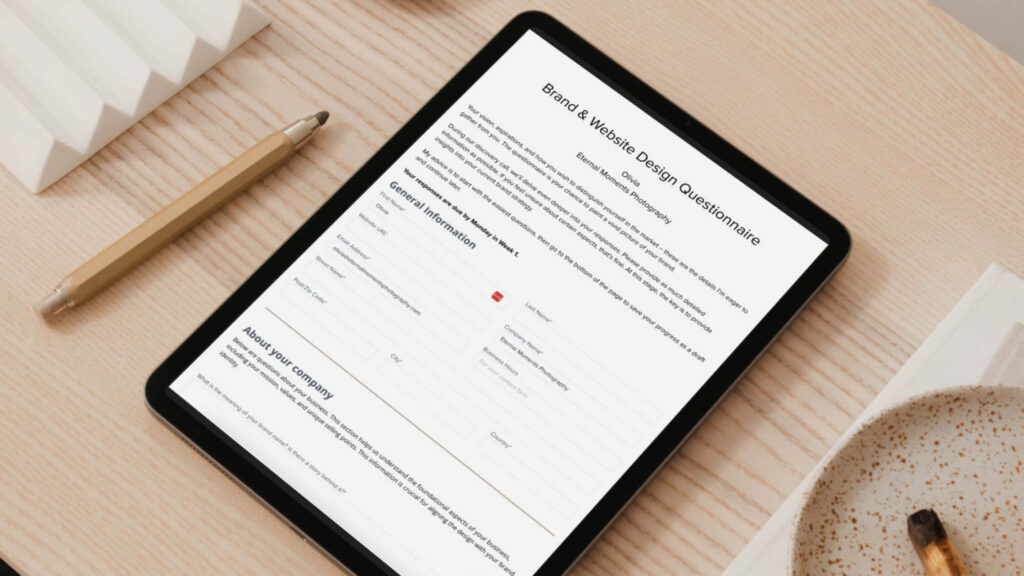
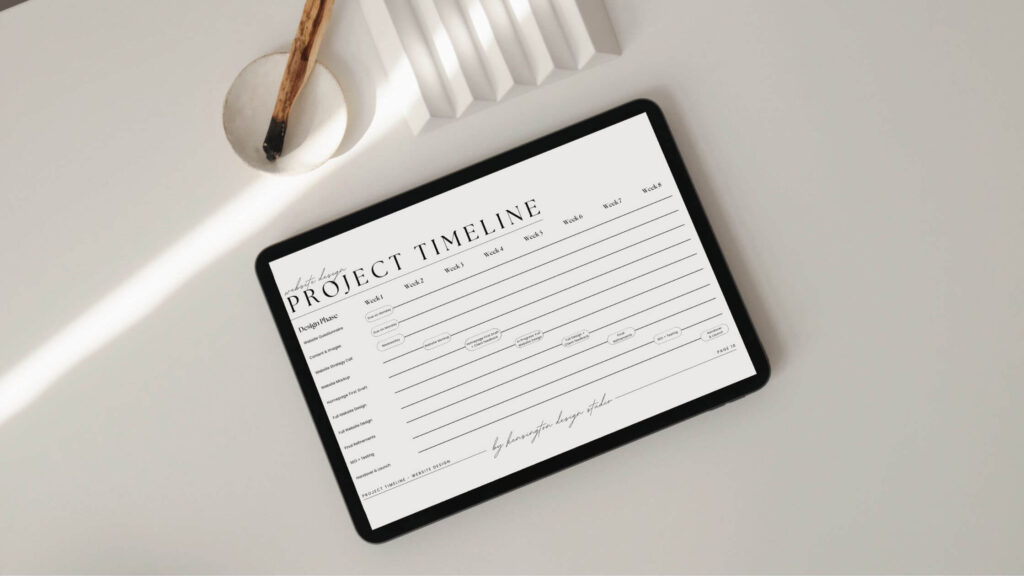
This is why my Client Experience Mapping program focuses on mapping your existing process rather than handing you generic templates. We identify the consultation questions that help you qualify leads effectively, the scope determination methods that work for your project types, and the communication approaches that resonate with your clients.
How being ready helps you stay present.
Here’s something counterintuitive: the more systematically prepared you are, the more present you can be with clients. When you trust your frameworks, you stop monitoring yourself during conversations and start focusing fully on the client’s actual needs.
But when you have reliable approaches for common situations, that mental energy becomes available for genuine problem-solving and relationship building.

Your practical starting point.
I know this feels like a lot to build, but you don’t need to create frameworks for every possible client scenario at once. Start with the situations that currently create the most anxiety or confusion for you.
→ Is it unclear feedback that derails your creative process? Create structured methods for clarifying vague input and guiding clients toward more specific responses.
→ Is it scope creep that threatens your boundaries? Develop clear protocols for addressing change requests that maintain relationships while protecting your process.
→ Are pricing conversations feeling uncomfortable? Build systematic responses for common pricing objections and practice different ways to communicate your value.
The goal isn’t perfection; it’s preparation. When you feel systematically prepared for your biggest client challenges, you approach all client interactions with more confidence because you trust your ability to handle whatever emerges professionally.
1. Start with your wins.
Look at your last few projects that felt smooth and collaborative. What did you do or say that created that positive dynamic? How did you handle questions or concerns that came up? What communication approaches seemed to resonate with those clients?
These successful interactions contain your personal blueprint for effective client relationships. The confidence you’re seeking already exists in these moments; it needs to be extracted and made repeatable.
When you start viewing your successful client interactions as research rather than just relief, something shifts. Instead of hoping the next project goes as smoothly as the last one, you start identifying the specific elements that made previous projects successful so you can apply them intentionally.
The goal isn’t to eliminate all uncertainty from client relationships; that’s impossible and probably wouldn’t be good for creativity. The goal is to build enough systematic confidence that you can handle whatever emerges without it derailing your energy or your work quality.
2. Build and refine based on real interactions.
Your frameworks will evolve as you use them. A response that works perfectly with one client might need adjustment for another. This isn’t a failure of your framework; it’s refinement.
Keep track of which approaches generate positive responses and which create confusion or pushback. Over time, your frameworks become increasingly effective because they’re based on real experience rather than theory.
The transformation that happens next.
Remember that question about whether confidence comes from controlling clients or trusting your own ability to handle whatever comes up?
Now we can see the complete picture. “Difficult” clients aren’t the problem, unprepared processes are. The confidence gap exists because successful outcomes alone don’t build systematic understanding. True client confidence comes from frameworks that help you navigate common challenges while maintaining authentic relationships.
But the real transformation isn’t external; it’s internal.
Confidence in client relationships isn’t about finding perfect clients—it’s about trusting your ability to handle whatever emerges.
When you have systematic frameworks for common client situations, you stop avoiding potentially challenging projects. You approach every new inquiry with genuine curiosity instead of anxiety because you know you can guide clients through any complication professionally.
Every client conversation where you scramble for the right response, every boundary test that catches you off-guard, every scope request that makes you panic—that’s creative energy you’re losing to unprepared processes. You’re not bad with clients. You’re just trying to improvise your way through predictable scenarios.
When you build frameworks for pricing conversations, when you create systematic responses for scope requests, when you establish clear protocols for communication management—you stop performing confidence and start feeling it genuinely.
This transformation isn’t about becoming someone different. It’s about systematising the approaches that already work for you so you can access them reliably instead of hoping you’ll find the right words under pressure.
The most successful designers I work with aren’t the ones who never encounter difficult clients; they’re the ones who approach every client relationship knowing they can handle whatever comes up. They have frameworks that feel natural, boundaries that clients respect, and communication approaches that turn complications into collaboration.
This is exactly why my Email template resource includes emails for the most common challenging situations designers face, and why my Done-With-You Dubsado program helps you build complete systematic frameworks for managing client relationships with confidence instead of anxiety.


